Why does the UK spend 25% of its defence budget on the nuclear deterrent?
Britain's defence spending has been a hot topic in recent weeks, thanks to the publication of the Defence Investment Plan (DIP), with choices over which equipment programmes are prioritised being widely debated.
As tensions rise and the threat posed by state actors such as Russia, China, North Korea and Iran grows, the UK’s contribution to Nato has come under increasing scrutiny – not just over how much it spends, but where that money is being invested.
However, a former UK Defence Secretary and Nato chief has argued that Britain's most significant contribution to the alliance may be one of its least recognised.
"What I think the allies needed to grasp, but have not sufficiently grasped at the moment, is the fact that 25% of the UK defence budget is accounted for by our independent nuclear deterrent," Lord Robertson told Chatham House's annual London conference.
"We make too little of it in this country," he said.
"But I can assure you, as somebody who has been in the Kremlin on a number of occasions, who got to know Vladimir Putin when he was on our side in the early days.
"I can tell you that the British independent nuclear deterrent is the one thing that moves the dial inside the Kremlin."
UK's nuclear deterrent
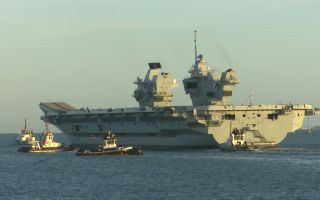
Continuous and uninterrupted since 1969, the UK's deterrent is fulfilled by Op Relentless – Britain's longest ever military operation.
It currently means at least one of four Vanguard-class submarines is at sea, armed with Trident Missiles.
The UK is the only European NATO member to formally declare its independent nuclear deterrent as a contribution to the alliance’s defence.
Under the Defence Investment Plan, £63.6 billion has been committed over four years to the Defence Nuclear Enterprise - an increase of £20 billion on the previous four-year period.
The funding is intended to sustain and modernise the UK’s nuclear deterrent, including infrastructure upgrades, the construction of new Dreadnought-class submarines and their warheads, as well as initial work on their eventual successor.
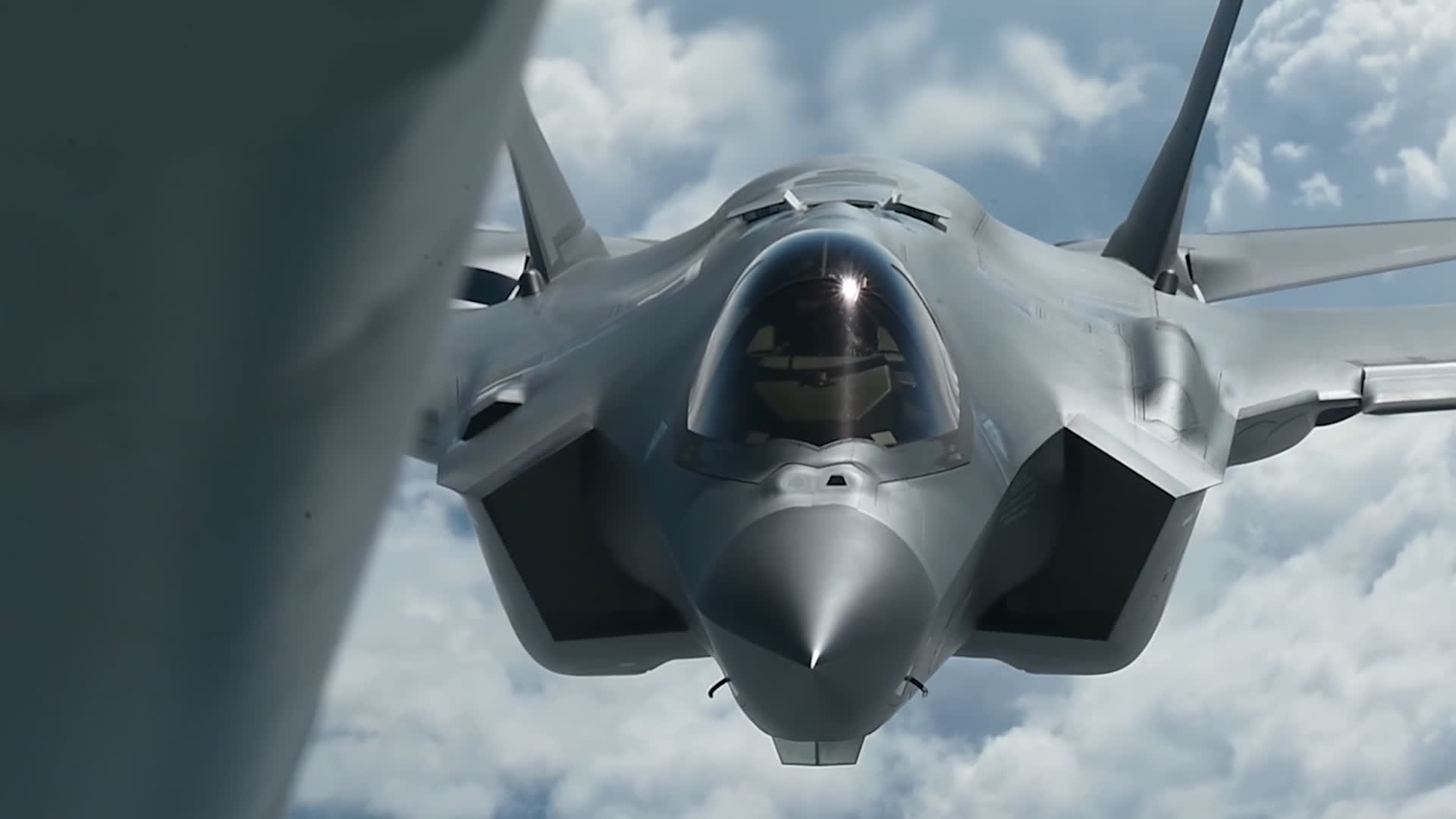
It also comes alongside plans to acquire F-35A jets capable of carrying nuclear weapons.
"How we square that circle of having an independent deterrent which we get no allowance for within Nato force structures, and at the same time deliver a Nato-first policy, is one of the biggest dilemmas," Lord Robertson said.
Issue of weak conventional defences
Speaking to BFBS Forces News, General Sir Richard Barrons, who once led Joint Forces Command and co-led the 2025 Strategic Defence Review, said: "Everybody knows that a strategic nuclear deterrent is not a battlefield weapon".
"So it doesn't make up for weak conventional defences.
"Indeed, if you overinvest in a strategic deterrent and you underinvest in your conventional forces, you are opening the door for your opponent to do something below the level of risk where the strategic nuclear deterrent becomes credible or relevant.
"But let's not have the conversation about how you get to 3.5 % or 5%.
"Let's have the conversation about, well if you don't do that and deterrence fails, like it failed in Ukraine in 2022.
"Then you'll end up fighting and that will cost you 50% of your GDP plus all the death and injury and all the destruction.
“So deterrence done properly is more than an insurance policy, it's a bargain."
Nuclear spending in the spotlight
Weeks before the DIP was published, the government announced it would seek to establish a new House of Commons-only Committee, to scrutinise the spending and programmes within the nuclear enterprise.
This came in response to a Public Accounts Committee report that identified the nuclear enterprise and UK special forces as 'scrutiny gaps' – pointing out a lack of detail in reports published on these sensitive areas, given the level of spend allocated to them.
It found highly classified projects often run into similar difficulties to others, and recommended a new style of committee that can hear more detailed evidence behind closed doors, so as not to jeopardise security.
On what is known as the escalation ladder, a gap is emerging between strategic nuclear weapons and conventional systems that offer less destructive power and deterrence, but also carry fewer geopolitical consequences. Finding ways to bridge that gap is now a focus for militaries around the world.
Tactical nuclear weapons, hypersonic missiles and, more broadly, long-range deep-strike capabilities are all at the centre of a modern arms race.
The aim is to develop weapons that can have a decisive impact on the battlefield without escalating a conflict to the point of mutually assured destruction.
Join Our Newsletter