Cheap and scalable: Were roadside bombs in Iraq a warning of the drone threat faced today?
Every year between 2003 and 2007, the number of British military fatalities in Iraq related to improvised explosive devices (IEDs) rose, becoming the most common cause of death at the hands of the enemy.
Cheap and easy to deploy at scale – especially when compared to their targets – they were not dissimilar to the threat of first-person view (FPV) drones that have been a common feature during the wars in Ukraine and the Middle East.
The shared characteristics between small drones and roadside bombs, the decades separating their emergence and the surprise at their effectiveness have prompted comparisons between the way the UK has responded to them.
Knowledge gained
Retired Brigadier Ben Barry was behind a once-classified lessons learned report on the British Army's stabilisation efforts in Iraq from 2005 to 2009, and was encouraged to leave nothing unsaid in order to help the service learn after Operation Telic.
Referencing stabilisation efforts in Basra, he told BFBS Forces News: "Very quickly, the opposition became more lethal than it had been in Northern Ireland at the height of the campaign there.
"Sunni and Shia insurgents and militias made extensive use of improvised explosive devices; both various types of suicide and roadside bombs."

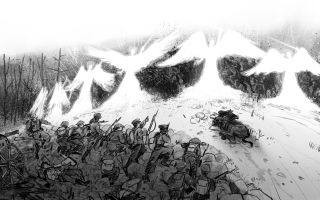
Iran started supplying Shia militia in 2005 with explosively formed penetrators (EFPs), containing a disc that an explosive focused into a metal slug.
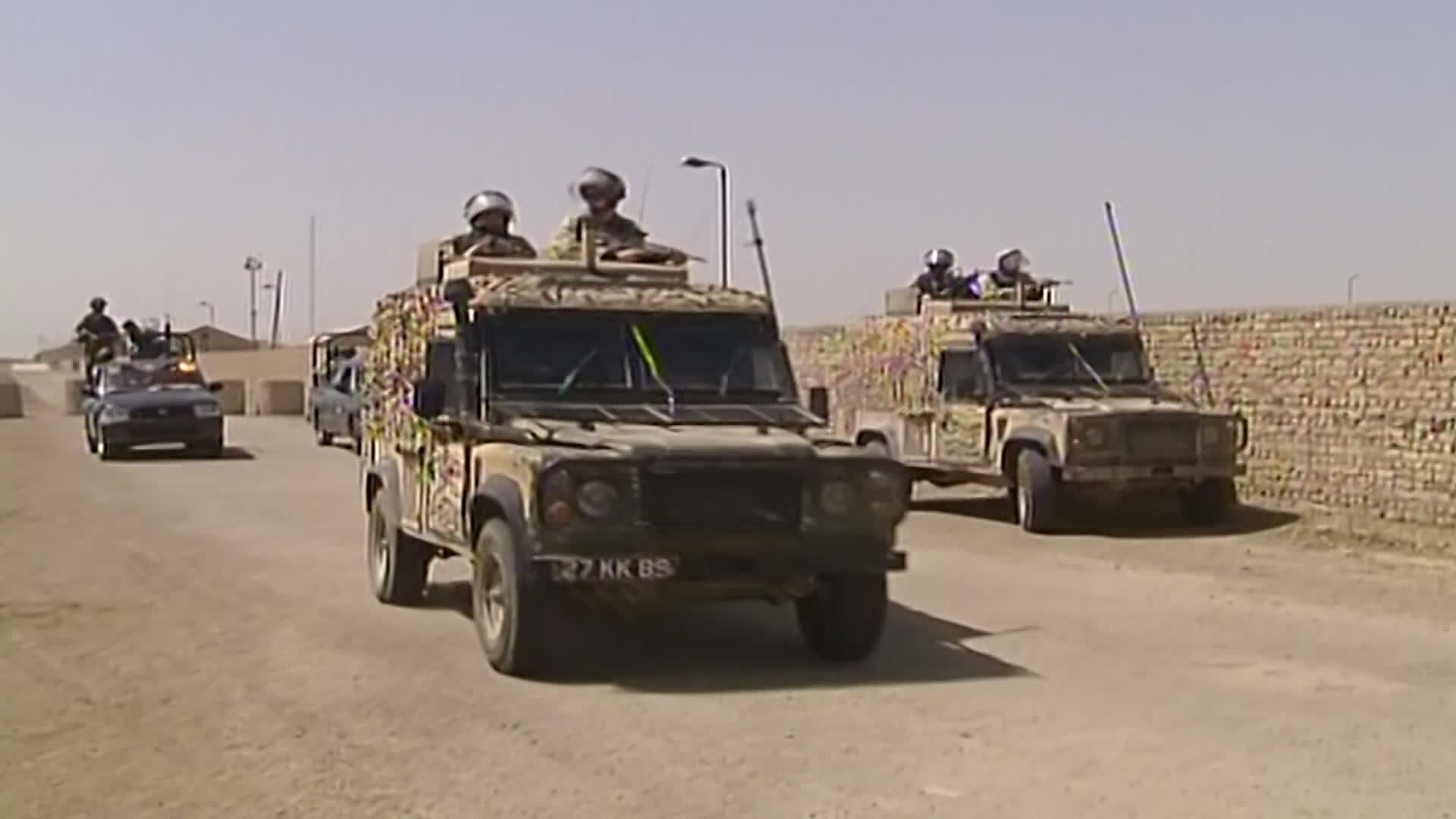
It overmatched much of the UK's patrol vehicle range – especially soft-skinned vehicles and lightly-armoured Land Rovers.
Electronic countermeasures used against IRA radio-controlled roadside bombs in Northern Ireland were far more easily jammed than the EFPs, which were initiated by a passive infrared signal.
An innovation race – similar to that faced today – required agility, to either roll out or fail fast with the new defence technology to counter EFPs.
However, new vehicles could not be rolled out immediately, and the response to roadside bombs formed part of Brig (Ret'd) Barry's conclusion that strategic leadership had been inadequate.
Some positive action was taken in response, though these in turn had their own consequential drawbacks.
Patrol patterns were changed alongside tactics, techniques and procedures, Brig (Ret'd) Barry noted.
"They reduced vehicle movement, and they also tried to complicate the terrorists' ability to attack them," he said.
"Now, all of that greatly reduced the amount of deployable combat power the British could put on the ground, and it meant they could spend much less time assisting the Iraqi army in southern Iraq in building their capabilities."
'Wading through glue'
Intelligence gathering efforts were bolstered, as was the approach to hit supply line networks behind these devices.
However, the decision not to attack in Iran - from where a lot of these EFP materials were smuggled over the border - meant this solution was limited.
Meanwhile, the UK's strategic goal of reducing troop numbers in Iraq, a lack of helicopter surveillance to spot signs of danger, and the expanded commitment to Afghanistan in 2006 all meant fewer troops on the ground to protect convoys.
"It wasn't clear who was responsible for what in the MOD concerning improving the equipment and the protection for British troops in Iraq.
"However, the injected uncompromising energy into the procurement of a new protected patrol vehicle, the Mastiff, was virtually proof against EFP warheads."
The Mastiff vehicle entered service in Iraq in late 2006, a technological answer to a challenge that had been cheap, scalable and difficult to combat for a sustained period.
So were the lessons in dealing with roadside bombs carried over to the 2020s, with cheap, alternative airborne threats emerging at scale?
"It's fair to say that a lot of commentators were surprised by the effective use of low-level drones," said the former Brigadier.
"The response to Iraq in many respects was insufficiently agile, insufficiently fast and flat -footed. I have a lot of contact with people in the army, the middle leadership and the senior leadership, and I think they've taken those lessons on board.
"But they do find the process… It's sometimes like wading through glue. When money is short, there are all sorts of constraints thrown up within the MOD about the spending of money and the spending of money on new things.
"And there is red tape around experimentation, particularly with ammunition and experimentation with things that fly.”
Lessons from the past
Laser weaponry development like the UK's DragonFire, the purchase of 50 new Apache helicopters, and recent experimentation to integrate drones to work alongside them may well all be seen in the future as evidence of the UK getting to grips with the FPV surge.
"The principles that applied to the British effort to counter the roadside bombs in Iraq seem to be being applied," Brig (Ret'd) Barry explained.
"In terms of engaging with the future and avoiding the sort of shock that they suffered with EFPs, I think the Army has been working very hard," he said.
However, the retired brigadier said evidence would suggest those inside the Army do not believe the service has enough drones or is doing enough with them.
Despite many drones now being produced in the UK, Mr Barry said many are heading to Ukraine, and cited likely frustration with "peacetime safety rules that limit what we can do in UK airspace and what we can do on training areas".
Ultimately, despite similarities in cost and their deployable nature, Mr Barry acknowledged the differences between FPV drones and roadside bombs alongside their demand for agile responses.
Today, the author of The Rise and Fall of the British Army, 1975–2025, remains optimistic and hopeful that hard lessons from Iraq could be applied to current times, rather than relearned entirely.
Join Our Newsletter