British troops would be deployed to support Ukraine not fight Russia, Lord Ricketts says

Any British presence in Ukraine, if there is a peace deal between Moscow and Kyiv, would be to help Kyiv's armed forces rather than to fight Russia, Lord Peter Ricketts has said.
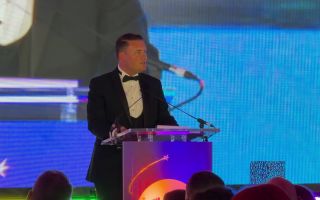
The former National Security Advisor spoke to BFBS Radio's Sitrep podcast about the possibility of British troops being deployed to eastern Ukraine as part of a 'multinational force for Ukraine'.
His comments came before Sir Keir Starmer revealed to the House of Commons during Prime Minister's Questions that a vote would be held in the House on moving any personnel to Ukraine if there is a peace deal to end the almost four-year-long war.
UK offering support to Kyiv
"I think people need to understand that this can't, I think, be about a warfighting force, a large armed force that would be prepared to take on the Russians in some kind of pitched battle," he said.
"I think it's much more to provide support in the background to the Ukrainian armed forces, control critical points, logistics, training, that kind of activity, which is all useful and good for the Ukrainians, especially if the Americans are saying they'll stand behind it too."
The observations from the former UK Ambassador to Nato followed the revelation that military hubs would be set up across Ukraine in the event of a ceasefire being agreed between Russian president Vladimir Putin and Ukrainian leader Volodymyr Zelensky.
US involvement in securing peace in Ukraine
Speaking about any US involvement in the multinational force, Lord Ricketts said: "We've known for some time that the plans among the Europeans, led by France and [the] UK, for a military reassurance presence of some kind, have been underway.
"The unknown has been how much US support there would be. Although, I think details are still a bit sketchy, it looks like there is some kind of US sign-up, both to providing the monitoring of a ceasefire zone line, a control zone, and also to support an allied force if it got into difficulty."
According to a summary of the agreement between Sir Keir Starmer, French president Emmanuel Macron, and Mr Zelensky, released by the Élysée, the United States is set to lead a ceasefire monitoring and verification mechanism, which the UK is expected to participate in.
A US guarantee, possibly in the form of air defence, has long been considered crucial to stopping Russia from taking further military action.
How could British troops ensure peace in Ukraine?
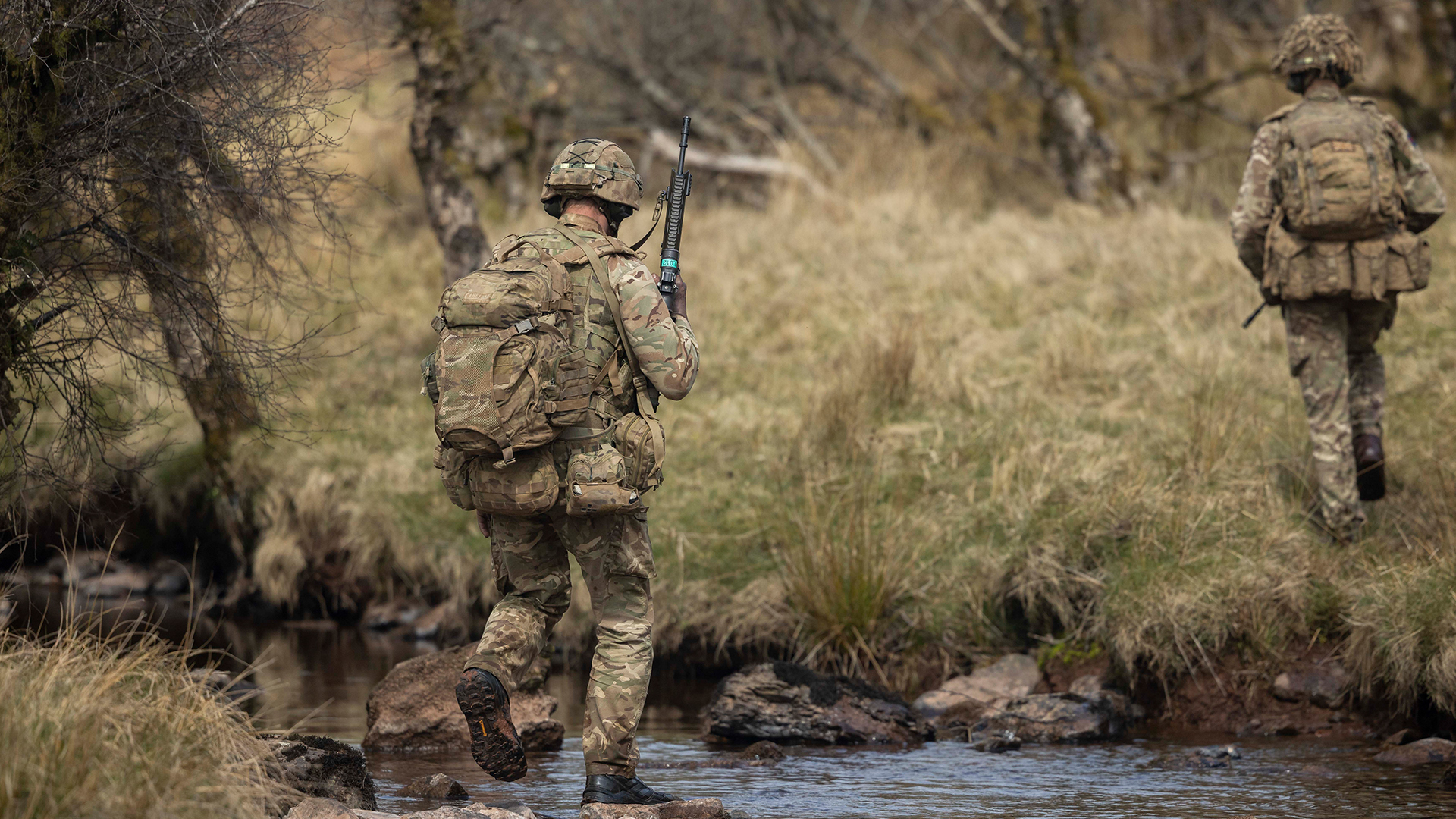
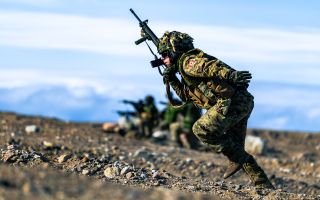
Senior British commanders have been drawing up plans for a while for putting "boots on the ground" if a peace deal is signed, according to BFBS Forces News reporter Simon Newton.
The figure that has been spoken about is a force of around 10,000 troops, split between the French and the British.
That number of personnel roughly equates to a large brigade, about three to five battalions, and they will reportedly be based in the previously mentioned military hubs.
They will support the Ukrainian military by building facilities to protect weapons and military kit.
There has also been talk of British and French troops protecting Ukrainian infrastructure, including power stations and ports.
Meanwhile, in the air, there is likely to be an air policing element and some presence in the Black Sea, probably to demine it and make it safer for commercial traffic.
These troops would be positioned away from the frontline in eastern Ukraine.
Washington is offering to provide intelligence and surveillance to monitor any ceasefire as part of a US backstop.
Potential problems
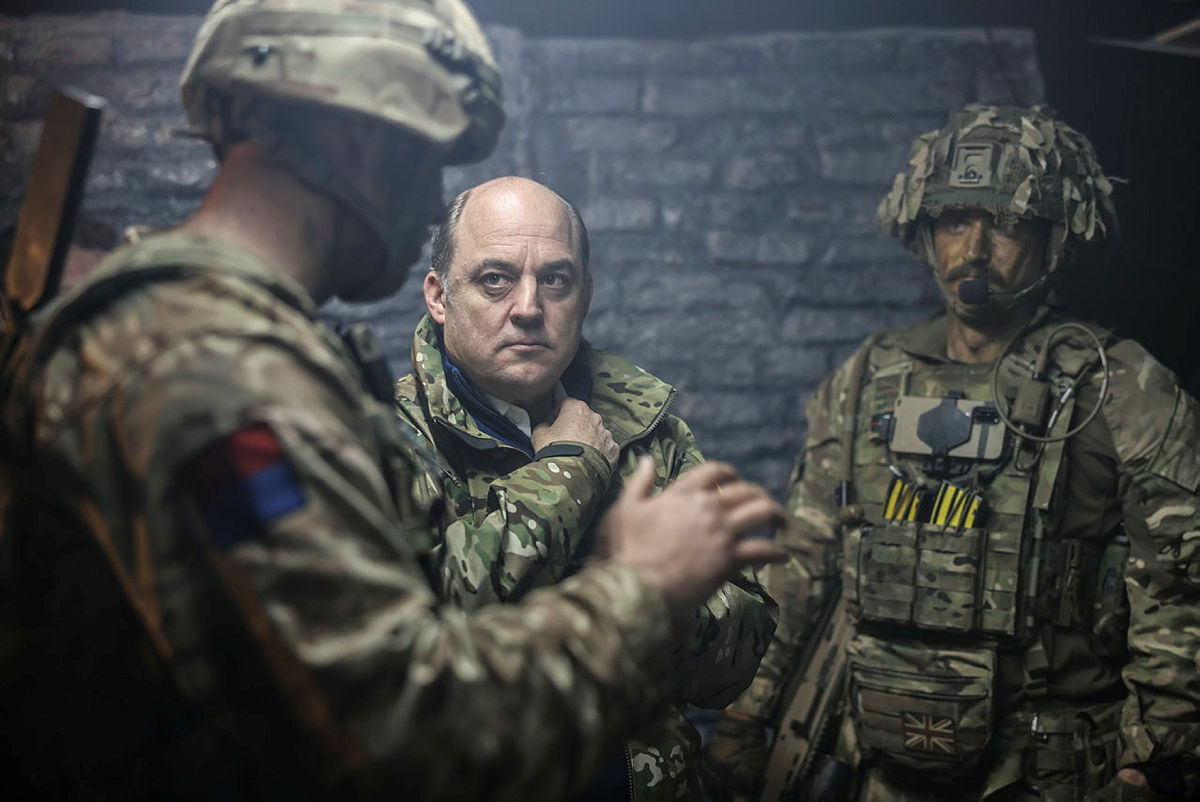
However, there are some influential people questioning the idea of the UK Armed Forces sending troops to protect Ukraine if there is ever a ceasefire.
Ben Wallace, a former defence secretary, said that the British Army, which is around 70,000-strong now, could only sustain a mission in Ukraine for a short time.
There has been plenty of evidence to suggest that Moscow could break any ceasefire, so British soldiers would need to have enough firepower on hand to defend themselves and, if needs be, fight Russian troops.
Other questions include whether the UK Armed Forces based in Ukraine would need armoured protection? And what would be the rules of engagement?
The biggest factor in all these discussions is Mr Putin. For all this happen, the Russian leader will have to be forced to accept it. And that isn't something that looks even remotely possible right now.
Additional reporting by Simon Newton.
Join Our Newsletter