Defence Secretary launches AI battle lab to help British Army prepare for modern warfare

British soldiers will be better prepared for modern warfare with a training system that uses AI, advanced analytics and virtual environments to ready troops for rapidly evolving battlefields.
A £2bn contract has been awarded to Omnia Training, a Raytheon UK-led consortium involving five UK-based companies, for the new system, which will help the Army prepare for future missions.
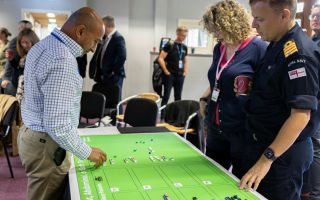
The main part of the system is the new combat laboratory, which is a digital platform that replicates the complexity of modern battlefields.
The combat laboratory
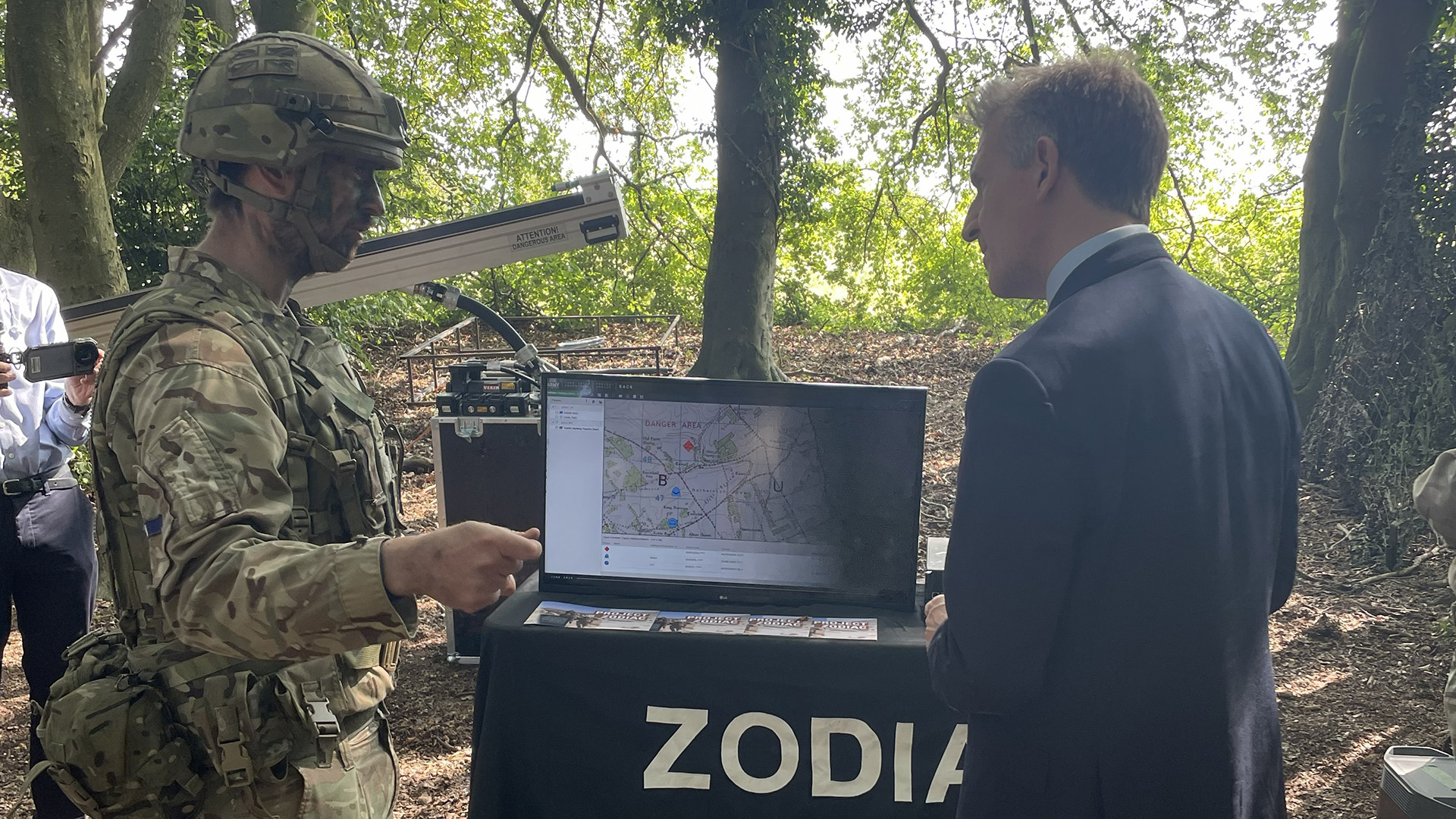
The combat laboratory will use simulation, live systems and analytics to assess operations, spot patterns and monitor performance using data and AI to support better decision-making.
It will improve warfighting readiness across all levels of command, from teams of 100 soldiers up to 50,000, helping to make the British Army warfighting-ready and strengthening support for Nato and allies.
"I think it's very significant. That's going to be great for the British Army in terms of having that capability to train on," Defence Secretary Dan Jarvis told BFBS Forces News' Tim Cooper on Salisbury Plain.
"It will bring together the very latest technology, so I can satisfy myself that our troops are getting the best training, not least given the world in which we live in and who knows what's going to be around the corner."
The system will be run by the Army's Collective Training Service, which is part of the Army's Collective Training Transformation Programme.
Learning lessons from Ukraine
Up to 60,000 soldiers per year will be trained on the platform, allowing commanders and troops to train anywhere, anytime.
It is hoped that the new system will help build a force prepared to respond to emerging battlefield threats, drawing lessons from Ukraine.
Asked about how the British Army is learning lessons from the more than four-year-long conflict, Mr Jarvis said: "This new investment will make sure that the British Army has got that training capability to integrate all of the different bits of the system.
"It gives me the confidence that when we're asking people to go off and do incredible things, that they've done the right training with the right mix of capabilities to make sure that they are best placed to be successful on the battlefield.
"And that's obviously what I need to make sure that they're prepared for."
The UK and Nato
This announcement comes after the Nato Summit in Ankara, Turkey, where the UK revealed that it will lead a multi-billion pound European drive to build the next generation of long-range missiles.
Prime Minister Sir Keir Starmer unveiled a £37bn ($50bn) commitment alongside a dozen European allies to build weapons capable of striking targets up to 2,000km away with pinpoint accuracy.
"I think the really important point is that we are interoperable with our Nato and European allies," Mr Jarvis, a former major in The Parachute Regiment, said.
"So, where we are making investment in our Armed Forces in the way that we are, we need to make sure that they both train and then are able to fight alongside our Nato allies.
"We take our commitments to Nato incredibly seriously, and it's very important that the kit and technology that we've seen… is able to be deployed alongside our allies."
"We launched Omnia Training over three years ago to deliver cutting-edge training to help the British Army effectively prepare for operations," James Gray, Raytheon UK's managing director and chief executive, said.
"Our UK-based team of innovators, engineers and experts will give soldiers and commanders a new level of training realism and set an example for effective collaboration between the Army and industry."
Raytheon UK, Capita, Cervus, Rheinmetall UK, and Skyral are the five companies involved in Omnia Training.
Additional reporting by Tim Cooper.
Related topics
Join Our Newsletter